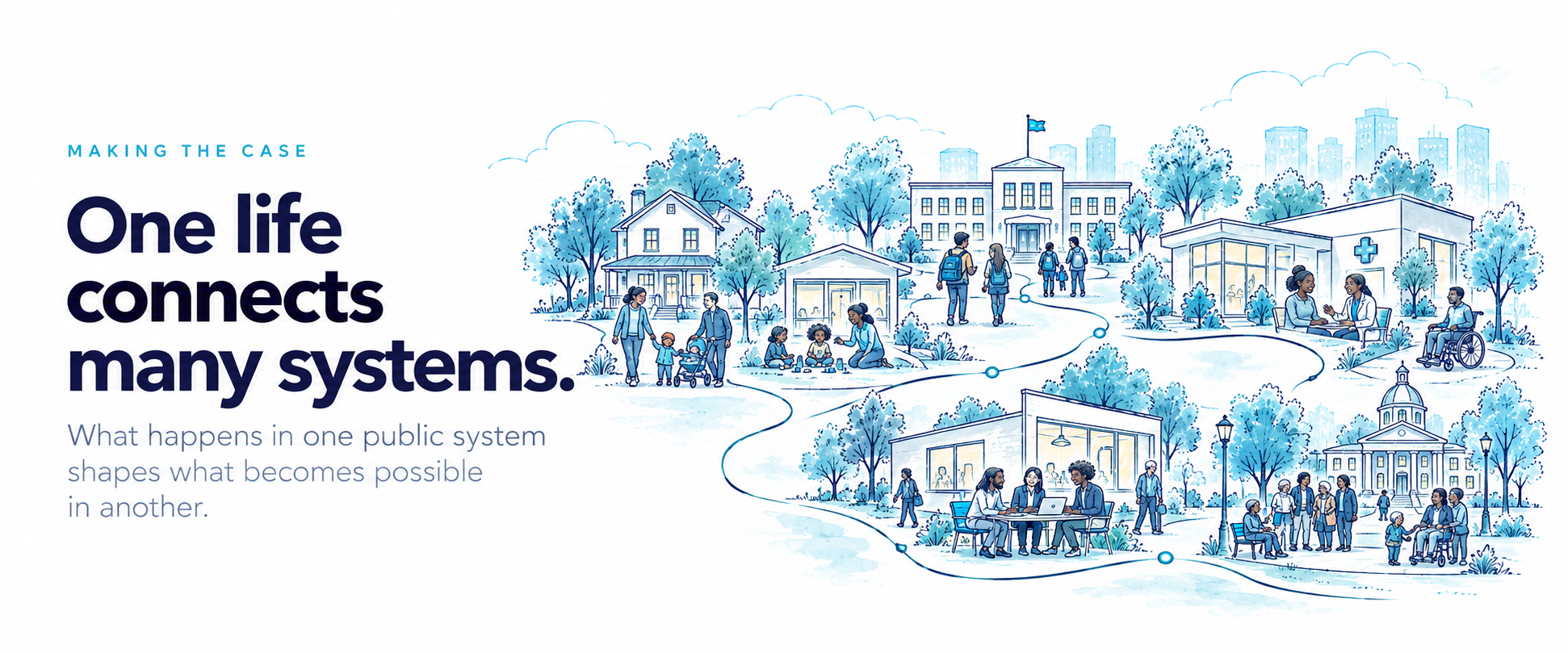
DBG changes the architecture: people should not have to become experts at navigating fragmentation in order to access opportunity.
DBG begins with a simple question: What would change if public systems were designed around how people and communities actually develop—not only around the problems that appear when development is disrupted?
Family & Community | When Families Must Navigate the System Alone
A family may interact with schools, healthcare providers, housing agencies, workforce programs, and community organizations—each with its own rules, timelines, and definitions of success.
The family becomes the connector between systems that were never connected to one another.
Education | When Intervention Comes Too Late
A student struggles to read, regulate emotions, or remain engaged in school. The system responds with another program, intervention, or referral.
But the difficulty may have begun long before the intervention—with developmental needs, family conditions, learning experiences, and community supports that were never connected.
DBG shifts the question from “What intervention does this student need?” to “What conditions must be aligned for this student to develop, learn, and flourish?”
Economic Development | When Jobs Arrive Before Readiness
A community attracts employers, creates incentives, and announces new jobs. Yet residents may still struggle to access or sustain those opportunities.
The missing piece may not be another workforce program. Education, transportation, childcare, health, housing, and employer expectations may never have been designed as one developmental pathway.
DBG asks whether we are creating jobs—or creating the conditions that allow people and communities to grow into opportunity.
Behavioral Health | When Crisis Becomes the Entry Point
A young person reaches a behavioral health crisis and multiple systems mobilize: schools, healthcare, social services, and sometimes law enforcement.
Each may respond appropriately within its own boundaries. The deeper problem is that the boundaries themselves can leave prevention fragmented.
DBG moves governance upstream—aligning the conditions that support belonging, regulation, connection, and well-being before crisis becomes the organizing event.
Different Problems Can Reveal the Same Design Challenge
Family and community well-being. Education. Economic development. Behavioral health.
The presenting problems are different. The underlying governance question is often the same.